Tuesday, August 30, 2011

Bhadrapadam-the sixth month of the Hindu lunar calendar (August 30-September27)

Bhadrapada maasam is named after the poorvabhadra star falls on that pournami day. It is called shunya (null or void) maasam and people devote this time for prayers. This month is considered inauspicious to conduct any auspicious functions. The festival of Ganesha Chaturthi is celebrated in the fourth day after no moon. The fortnight after the new moon is the reserved for the dead ancestors by paying homage to the ancestors, especially by food offerings. 
September 1
Vinayaka Chavitha or Ganesha Chaturthi is the festival of Lord Ganesha observed on chaturthi the fourth day of waxing moon in bhadrapada maasam. Lord Ganesha is the son of the divine couple of Lord Shiva and Goddess Parvathi. He is worshipped before initiating any puja or ritual. All energies are dedicated mainly to Vinayaka, HE is the one with full of wisdom.  Lord Ganesha is the one who can guide us to be successful by predicting the forthcoming obstacles and destroying the evil forces. The festival is widely celebrated in all Hindu communities around the world, an exuberant event in the state of Maharastra and southern India. The present kind of celebrations of Ganesha Chaturthi came into fashion in 1893. Lokmanya Tilak, an Indian freedom fighter and social reformer reshaped the annual Ganesh festival from a private family celebration into a community event.  The festival is celebrated for nine or eleven days in the local communities along within the homes and temples. Later, on the eleventh day the idol is immersed in the water body with huge processions. Vinayaka brings auspiciousness, hope, success and happiness to all homes. During his brief stay HE removes all obstacles. While returning HE takes with him all problems and unhappiness.  If you are aware of the complete puja procedure you can as well do it, if not pray or chant the Lord’s name with devotion on this day. Early in the morning take head bath, wear new or washed clothes, light a lamp or incense stick, offer flowers and leaves (yes, leaves. Ganesha enjoys if puja performed with leaves, especially Durva grass), offer fruits or sweets to Ganesha. Pray, chant any slokas you know or at least the Lord’s name, with devotion; the least you can do, for Vinayaka to fulfill all your wishes with no obstacles on the way to your success.
May the Lord Vinayaka remove all obstacles and shower you with success in all your endeavors. Happy Vinayaka Chavithi!
September 2
Rushi Panchami is observed on the fifth day after the new moon in the Bhadrapada month that is the day after Ganesh Chaturthi. This is a vratha or puja to be performed by women. Women believe that by this pooja they get rid of the reactions of offenses committed during their menstrual period. On the Rushi Panchami day women dedicate the worship to the Sapta Rishis – the seven sages – Kashyapa, Atri, Bharadhwaja, Vishwamitra, Gauthama, Jamadagni and Vashishta. Last year, my aunt performed this vratha. This generation, we see few people observing this vratha in south India but more prevailing in northern India and Nepal.
September 9
Vamana Jayanthi is the day of the appearance of the fifth avatar and as the first total human incarnation of Lord Vishnu. This falls on the twelfth day after the new moon in the bhadrapada maasam. Lord Vamana, a dwarf Brahmin, appeared as the son of Aditi and the sage Kashyapa. The aim of the incarnation was to help Devas (Demi gods) who had lost their power to King Mahabali, a devotee of Lord Vishnu. Vamana approached King Bali. King Mahabali generously offered to give three steps of land what Vamana asks for. Not knowing that Vamana was Lord Vishnu and came to take away his wealth and kingdom, Mahabali agrees to give three footsteps of land. Taking this opportunity Vamana expanded into gigantic form covered the cosmos with one step, earth with second step and the third step on Mahabali’s head and pushed him into netherworld (pathalaloka). The Onam festival (especially in Kerala), the day of Vamana Jayanthi, celebrates the annual visit of King Mahabali, a boon given by Lord Vishnu. This story of Vamana avatar from Srimad Bhagavatam is recited with great love and devotion during important ceremonies also.
September 14 - 27
During mahalaya paksham, rituals are performed by relatives for the departed souls of dead ancestors, parents and relatives. These are from the day after new moon(pournami) to the no moon day(amavasya). Mahalaya Amavasya (September 27) is most important day of performing shradha (food offerings) or tarpan(water offerings). Ancestors are said to descend on earth, with great expectations, to receive the food (pindam) and tilothakam (water and sesame seed mixture) offered by their family. Shradha is performed on the birth tidhi of the dead person during the mahalaya paksham.
The person who performs the Shradha should realize that for his birth, body, knowledge, wealth and sanskar he is indebted to the ancestors. All the assets, name and fame a person and his family have was given by the ancestors. So the ritual performed is a sort of thanksgiving to our ancestors.

Monday, August 15, 2011

Indian Independence Day!

Let me first wish you all a Happy Indian Independence Day! 
Red Fort, Delhi
“At the stroke of the midnight hour, when the world sleeps, India will awake to life and freedom…..” the words delivered in the famous speech on “Tryst with Destiny” of Pandit Jawaharlal Nehru, the first Prime Minister of India, while unfolding the Indian flag on the barricades of the Red Fort in Delhi on 15th August 1947. It is the time when India gained independence from the mighty British rule. Since then Indian Independence day is celebrated in great zeal and fervor. The day symbolizes the victory of Indian patriotism; people pay their respect to the thousands of martyrs who sacrificed their lives for the country. Men, women, and children all walks of life celebrate with pomp and gaiety across India. Though it is a national holiday all the employees, staff gather for the flag-hoisting ceremonies. In spite of holiday, it is not different in schools and colleges. I still remember, we all the students and the staff members our school principal would be present to celebrate the day. I think this the only day even on a holiday we all would wake up early and would like to be in the school to be a part of the celebrations. All the students were trained weeks before the day for the march-past, and special drill exercises to be presented on Independence Day. 
Around 7:00 in the morning, well dressed in our school uniform we used to come prepared with our props to display special drill exercises in front of the hoisted flag and the special distinguished guest of the day. As the flag is hoisted by the special guest, we all sing national anthem and pay respect to the flag by saluting. After the distinguished speaker’s speech, we used to disburse off to our class to get some sweets distributed by our teachers. Early in the evening all the children and the parents would gather for a sort of cultural programs based on patriotism. I was fortunate to have participated in the cultural events couple of times in my middle school days. 
 On the national level, Prime Minister delivers a speech addressing the nation at the Red Fort in Delhi after flag hoisting. I happened to hear it on the radio along with all the patriotic songs that were played that day. Once television set entered our living room, I had the opportunity to watch the live coverage of the Prime Minister’s speech at the Red Fort. Nowadays most television channels telecast cultural programs, movies related to independence, apart from the patriotic songs that regenerate the hidden patriotism in people.
As a whole, it can be said that Independence Day is a holiday much awaited by many people in India, every year.
The unconquerable courage of tiger
The serenely beautiful heart of lotus
The colorful soul of peacock
That is what is there in India and in an Indian. 
Jai Hind!

Please enjoy this video.

“One individual may die for an idea; but that idea will, after his death, incarnate itself in a thousand lives. That is how the wheel of evolution moves on and the ideas and dreams of one nation are bequeathed to the next”
- Netaji Subhash Chandra Bose

Thursday, August 11, 2011

Childhood summer travel memories

Summer, school is out and is travel time to most of us. As a child, every year I used to wait for summer so that our family could travel by train and visit my grand mother, relatives and the most wanted cousins to play with. The things we did during summer in my childhood, I still remember till today. Even before we complete our exams we used to start our summer plan with our dad and make arrangements to buy train tickets. Since that day we used to feel as if our journey has started, in our thoughts and words. We used to buy dresses and gifts for our cousins. We would be excited to get our report card from school and hop into the train.
Once the packing is done we say goodbyes to our friends and off to the train station by hiring a horse-pulled cart. My dad used to hire a porter to get our suitcases which we packed for our almost-one-month stay. Once into the train, my two brothers and I used to pretty much fight for the window seat, and eventually take turns or squeeze in a single seat to get the view through the window. Within a short time it would be dinner time we all would have some tasty food, pulihora (tamarind rice), which my mom used to carry for us from home. We used to read some comic books or chat for some time and then again the preferences for the berth distribution. Each one of us wanted the top level berths and usually the older one get the top and youngest one always the middle or lower one. The moment we laid our back on the berth, we start dreaming what we would do as soon as we visit our village. Even before we knew we slowly fell asleep, we would be awakened by the noise on the platform and porters to help carry the luggage. We had to take a local bus bumping and jerking on our village roads to reach grandma's place (of course, today’s travel modes have completely changed). 
Once we are home with grandma we would forget all the troubles we had on the way. We immediately jump into the backyard and look around the house and try to find any changes, since our last visit. My grandma’s house has cattle, hay stack, and small lakes around. My best part was playing in the hay stack. We could not wait to go to the lakes for a swim, play in the hay stack and play around the cattle. All our uncles’ aunt and cousins would come in. Playing and being around cousins is a unique experience, unlike friends, which I cherish till today. During my 5th grade summer, I went to lake with my cousins and somehow could not get my breath while swimming my eldest cousin noticed, unknowingly I was moving away from the group, and he swam through his breath and caught hold of me. I still remember the day but did not stop going back to the lake. We feel we just landed there, even before we know the return journey would fast approach. With heavy hearts we say goodbyes to our cousins and take blessings from all the elders. Usually our return journey would be partly day journey; day journey by train would be the best part of the travel. We come across so many families, make friends with the children and start playing. Meanwhile some food items would be brought by the sellers and we would insist on buying them, my mom would tell us some stories that they are not good for health and she would give some snacks which my aunt has given. We would sit near the window get an illusion of the trees going behind the train and sometimes wave my hands to the people out in the fields. Intermittent halts in most stations would be a break to buy some stuff on the platforms. My travel post would not complete if I would not mention about sitting near the window feel the air onto our face. 
Usually our last segment back home would be in coupe, means a cabin just for our family. That is when we would miss all our cousins for which we had to wait until next summer. My parents would start talking about back to school. The fun part is here my dad used to think enjoying the entire summer with cousins, we forgot our alphabets, basic math and used to ask us the basic questions. On this lighter mood we all adjust back into our seats, try to see the darkness outside the window for a brighter morning to meet our friends and start another school year.

"Travel and change of place impart new vigor to the mind." 
-Seneca
"And that's the wonderful thing about family travel: it provides you with experiences that will remain locked forever in the scar tissue of your mind."  -Dave Barry

Sunday, July 31, 2011

Sravana-the fifth month of the Hindu lunar calendar (July 31-Aug. 29)


The fifth month of the lunar calendar is Sravana maasam, filled with auspicious days and numerous rituals. Sravana maasam is named after the janma nakshatram (birth star), Sravana, of Lord Vishnu. Worshipping Goddess Laxmi this month is highly auspicious. Mondays in Sravana maasam is dedicated to Lord Shiva and many people observe the famous Sravana Somvar (Monday) vrata. Mangala Gauri Puja is performed on Tuesdays. Sravana Sukruvara puja is performed on Fridays. Saturdays in Sravana maasam is dedicated to the worship of Lord Shani.
All Tuesdays (2, 9, 16, 23)
Mangala gauri vratham is dedicated to Goddess Mangala gauri who is also known as Goddess Parvathi. According to a legend, Drowpadi once asked her brother Sri Krishna, what women should do to prevent widowhood and lead a life of joy and prosperity. Lord Krishna told her about Sravana Mangala Gauri Vratham in which people pray to the Goddess to achieve their goal. Normally, this ritual is performed by women from the Sravana masam immediately after the marriage. This is continued for five years when it is said to be complete, with worship completed on all Tuesdays during the five years. The observance of vratham mainly comprises of puja, Mangala Gauri vratha katha (story of the ritual) is chanted during the end of the vratham. Prasadam, turmeric and kumkum, soaked whole bengal gram with betel leaves and betel nut is distributed to other married women.
August 12, 2011
Varalakshmi vratham is observed on Friday before pournami (full moon). Friday is the most auspicious day for Lakshmi Devi, the Goddess of wealth and prosperity. Puranas described that observing Vara Lakshmi vratham would bless a woman with all eight supreme forms of wealth for life-pleasure, food, courage, peace, strength, success, wisdom and money. This vratham is mainly observed in the south Indian states, also Maharastra and Goa. Though mostly performed by married women, even unmarried girls perform when the elders perform in their house. After performance of the puja Vara Lakshmi vratha story is read, different types of food and sweets are offered to Goddess Lakshmi. Later kumkum and turmeric with betel leaves and betel nut is offered to the invited ladies. I have been performing this since my childhood and continuing till date, which is close to my heart.
August 13
Jandyala purnima (full moon day) and Rakhi purnima
Rakhi purnima festival  highlights the eternal love and affection between brother and sister. Sister ties the rakhi (protective thread) to brother and brother in return gifts sister. Jandyala purnima is wearing of new Jandhyam means yagno-pavitham or the sacred thread by Brahmins in Andhra Pradesh, Tamilnadu, Karnataka and Kerala. After the first year of Upanayanam, Upakarma is observed on this purnima. Old sacred thread is removed and new sacred thread worn on this day.Gayatri Japam is performed with the new thread.
August 22
Krishna Ashtami or Janmashtami (eighth day after full moon)
Krishna Ashtami is the joyful celebration of Lord Krishna’s birthday. Lord Krishna is born more than 5000 years ago in Mathura, as one of the ten dasavatara of Lord Vishnu. Lord Krishna is worshiped with utmost pomp in many places of India. The significance of Sri Krishna is that he used his life to explain to us the great teachings in Bhagavd Gita. Sri Krishna will never automatically solve your problems, but guides and help make us understand the foolishness in expecting God to deliver the goods. We have to perform the actions and each action will have a fruit. He showed us the way to live in the modern society. He showed us the concept of Brahman – that life is continuity. Live in the moment and life will be a celebration. The true significance of Sri Krishna is that he is relevant in the present and even more relevant for the future.
As part of the celebrations, processions with children dressed as Sri Krishna, Radha and gopis are held. Stories of Krishna are also enacted on the day.
August 29
Polala amavasya (no moon day) - is an important vratham dedicated to Goddess Poleramma, observed on Sravana amavasya (no moon day). Goddess Poleramma is known as the protector of children. Symbolically Goddess is worshiped in the form of “kanda mokka” (suran or yam shrub) or “kanda dumpa”(suran or yam bulb). Women perform puja and raksha thoranam (sacred protective thread) is also worshipped during the puja. According to vrata texts, by performing this vrata one can safe guard their children from the clutches of death. Every year, offering prayers to Poleramma coincides on the amavasya day and hence the vrata is called Polala Amavasya. Women tie the sacred thread to her children after reading the story about a mother who prayed Poleramma to help bring back her dead young children. For the welfare of the male children (boorelu) fried sweet balls of chana dal and jaggery are made, for the welfare of female children (garelu) urad dal vadas are made and offered to Goddess Poleramma.

Sunday, July 24, 2011

Happy Parents Day!

'Matha-pithru samo devo
Naasthi naasthi jaga-thrayee
Thayo-hu sevaa nadhika-punya vratham
Naasthi srunu priyee'
-Shiva Datta for Pandurangadu movie

Family is the starting point of life. A family begins with the joining together of man and woman as husband and wife, becoming father and mother-the parents. In 1994 President Bill Clinton signed into law the resolution unanimously adopted by the U. S. Congress establishing the fourth Sunday of every July as Parents' Day. This year it happens to be on July 24.  Parents’ Day is established for recognizing, uplifting, and supporting the role of parents together in the rearing of children. The role of parents is crucial in the nurturing and development of children. They inculcate fundamental values to help shape your character to be a good citizen. As I feel, from mother comes care and comfort, from father honor and legacy. When a child is taught to respect his parents, it is the beginning of a greater perspective on the world. By giving respect to his parents, a child begins to see that there are others worthy of consideration. Such thinking about others eventually leads a person to be respectful to others as him.
The moment I was born till I grew up and got me married, mom and dad, you were always there in every step of my life. You have put up with me for so many years and always managed me to uplift and bring smile on my face. I don’t know how you both do it but I am so grateful that you do and I am born lucky to have you as my parents. Thank you for being the best parents a daughter would ask for. I cannot limit myself to a day, Parents Day, to convey my heart felt thanks and show gratitude for all the love, care, affection, and support you shower upon me. 

"Good parents give their children Roots and Wings. Roots to know where home is, wings to fly away and exercise what's been taught them." -Jonas Salk

Saturday, July 16, 2011

Nieces dance performance

Kuchipudi, has a unique place among the Indian classical dance forms. Kuchipudi derives its name from the village of Kuchelapuram, in Andhra Pradesh, India. It was in the 14th century, however, that the ascetic Siddhendra Yogi appeared on the scene and gave Kuchipudi a new definition and direction. Kuchipudi was originally a male dance tradition.  It is only in the last century that women have been introduced to this art form. Kuchipudi in its present form is the result of the vision of stalwarts like Padmabhushan Vempati Chinna Sathyam and the late Vedantam Laxminarayana Shastry. Kuchipudi is characterized by fast rhythms and fluid movements, creating a unique blend of control, strength and delicacy. The actors sing and dance, and the style is a blend of folk and classical. Arguably this is why this technique has greater freedom and fluidity than other dance styles.
There is plenty of information about Kuchipudi, which I am not knowledgeable enough
to write. I have put just a few words to my nieces on their special performance (arangetram) to their grandparents, family and friends in Annamayya`puram. I appreciate, you both, for presenting your dedication to the dance in performing in front of the Lord and to the family and friends as well. I enjoy your subtle facial expressions, complicated rhythmic patterns, and melodic gestures. I am not just excited for both of you. I am also proud of your effort and achievements. I am sure the feeling of joy will stay with you forever, for many more accolades.

Anatomy of a dancer
A dancer's heart beats in eight-count
A dancer's eyes always shine
A dancer's soul is filled with music
So their feet always fall in time
A dancer feels like no other
The vibrant rhythm of life
And it all goes into the performance
All the joy and all the strife
So remember that with dancers
A little patience is what you need
Because their minds are otherwise engaged
Dancers are truly a different breed
- Jessica Bondreaux


"Good art is a form of prayer. It's a way to say what is not say-able."
- Frederich Busch

Wednesday, July 6, 2011

Celebrating Birthday as per Hindu calendar

Birthday plays extreme important in our lives. Birthday traditions in different countries, though quite similar, vary in specific ways to that particular country. Many Africans do not celebrate birthdays but arrange initiation ceremonies and participate in ancient rituals. Most Asian children wear finest new clothes and seek blessings of their parents on their birthdays. Elders in the family and friends give them money and gifts. Many children visit shrines along with their families to thank God for their health and strength and ask to be blessed with continued well-being in the future. Each European country has its own traditions of celebrating birthdays. Native American tribes lay emphasis on milestones in a child's development rather than the day a child is born.
Gregorian calendar is widely used all over the world and so it is common and easier to remember and celebrate Birthdays. As per the Vedic tradition, there is a special place for birthdays as to when and how they are celebrated. Hindus celebrate birthday according to solar or lunar calendar followed in their communities. Birthdays are celebrated according to the Hindu month when the child was were born, the day (tidhi) that comes in either that of waxing or waning moon and/or the birth star (nakshatra). In some regions Hindus give importance to the tidhi and in some  the nakshatras. Celebrating a birthday is actually expressing gratitude to God.
In the first year of life every month and thereafter every year on the date of birth as per the Hindu calendar one should bathe after an oil massage. This should be, followed by application of kumkum (vermilion) on the forehead. Mother gives arathi and blesses the child. As an adult perform ritualistic worship to the family deity by lighting an oil lamp, offer namaskar to parents and elders in the family. At the end of this ritual unbroken turmeric- rice grains (akshataa) are sprinkled on the head of the one who is performed after venerating one’s family deity. Any gift given to the child is considered as a holy sacrament. There are benefits of celebrating a birthday as per the Hindu calendar (tithi) day or (nakshatra) star of the moon, as against the date of birth as per the Western calendar. When celebrating the birthday on this date, through the rituals and a prayer made unto the family deity, the supreme energy generated helps to combat the distressing energy attacks at various levels. I also read that physical body benefits 5% and subtle body 95%. Satva (quality of goodness) component of the subtle body increases and so does his/her introverted attitude.
Hindus who celebrate birthday with modern day practice of cutting cake and gather around friends to party, visit temples first and perform pujas. The blessings and good wishes of relatives and well-wishers bring maximum benefit to the individual celebrating the birthday as per the Hindu calendar. If your family follows Hindu calendar, the best thing for you is to celebrate as per the Hindu calendar. If you think calculating the days on Hindu calendar is difficult, use the technology, now there are many applications and software you can download to help calculate. A birthday is a time to celebrate birth itself, the joy of life.

"A birthday is just the first day of another 365-day journey around the sun. Enjoy the trip."
- Unknown

Monday, July 4, 2011

American Independence Day!

Fireworks and celebrations mark the 4th of July across the country. My interest in US history made me collect some facts about American Independence Day. Here are some of them.
I am sure you were not born to view this patriotic trailer shown in theaters prior to the 4th of July 1940. View the trailer.

In 1775, people in New England began fighting the British for their independence. On July 2, 1776, the Congress secretly voted for independence from Great Britain. The Declaration of Independence was first published two days later on July 4, 1776. The first public reading of the Declaration of Independence was on July 8, 1776. Delegates began to sign the Declaration of Independence on August 2, 1776. In 1870, Independence Day was made an unpaid holiday for federal employees. In 1941, it became a paid holiday for them.

Most Patriotic-Sounding Place Names
Thirty-one towns in the U.S. have the word liberty in their names. The most populous one as of April 1, 2010, was Liberty, MO, and Iowa has more of these places than any other state (Libertyville, New Liberty, North Liberty and West Liberty).
Thirty-five towns have the word eagle in their names. Of those, the most populated is Eagle Pass, Texas.
Eleven places have the word independence in their names. The most populous one is Independence, MO.
Nine towns have the word freedom in their names, with the most populous one being New Freedom, PA.
Only one place in the whole country has the word patriot in its name— Patriot, IN.
Five towns have the word America in their names. The most populous is American Fork, Utah.

Cookouts on Fourth of July

More than 1 in 4 chances are that the hot dogs and pork sausages consumed on the Fourth of July originated in Iowa. The Hawkeye State was home to 19.0 million hogs and pigs on March 1, 2011. This estimate represents more than one-fourth of the nation's estimated total. North Carolina (8.6 million) and Minnesota (7.6 million) were also homes to large numbers of pigs.

6.8 billion pounds is the total production of cattle and calves in Texas in 2010, which accounted for about one-sixth of the nation's total production. And if the beef did not come from Texas, it very well may have come from Nebraska (4.6 billion pounds) or Kansas (4.1 billion pounds).
Georgia, Arkansas, North Carolina, Alabama, Mississippi or Texas — is the source of your barbecued chicken with production of $1 billion or greater between December 2009 and November 2010.

Over 1 in 3 odds is that your side dish of baked beans originated from North Dakota, which produced 36 percent of the nation's dry, edible beans in 2010. Another popular Fourth of July side dish is corn on the cob. Florida, California, Georgia, Washington and New York together accounted for 68 percent of the fresh market sweet corn produced nationally in 2010.
Potato salad and potato chips are popular food items at Fourth of July barbecues. Approximately half of the nation's spuds were produced in Idaho or Washington State in 2010.
More than three-fourths, of the nation's head lettuce production in 2010 that came from California.
Florida is the state that led the nation in watermelon production last year (750 million pounds). Other leading producers of this popular fruit included California, Georgia and Texas each had an estimate of more than 600 million pounds.


"Those who deny freedom to others deserve it not for themselves."
- Abraham Lincoln

Saturday, July 2, 2011

Ashada-the fourth month of the Hindu lunar calendar (July 2-30)

Ashada maasam is the fourth month of the lunar calendar followed in Andhra Pradesh, Karnataka, Maharashtra, and Gujarat. Poorvashada nakshatram (star) falls on this pournami day, hence Ashada maasam. This month is not a good time to perform any auspicious functions like marriage, house warming, upanayanam, annaprasanam etc. Some communities in South India, have a tradition that newly married daughter-in-law and mother-in-law and/or son-in-law and mother-in-law usually do not live in the same house during this month. It is such a pleasure to me and my son to share our birthdays this month.

July 3-Jagannadha Swami ratha yatra
Ratha yatra (chariot festival) at the world famous Puri Jagannath Temple in Orissa is more than five thousand years old.  The making of the rathas for the annual festival begins on the Akshaya Tritiya day (Vaisakha maasam). The three chariots (rathas) used for the annual ratha yatra are constructed new each year. The chariots are a classic example on indigenous engineering marvel. Three chariots with the idols of Lord Jagannatha (Krishna), Balarama (Balabhadra) and their sister Subhadra are pulled by the devotees through the city.  Millions of pilgrims attend the festival and to pull the three new huge chariots Devotees of Jagannath believe that if one pulls the ratha of Jagannatha, Lord Jagannatha pulls his life-ratha. It means one who pulls the ratha, his life will be guided by mercy of Lord Jagannatha. Symbolical meaning of the chariot is: “The body is the Chariot and the soul is the deity installed in the chariot. The wisdom acts as the charioteer to control the mind and thoughts.”
Similar ratha yatra takes place in Gujarat on the same day. The Ahmedabad rath yatra has been taking place for more than 130 years.
July 11-Chaturmaasam (four holy months)
Chatrurmaasam, the four holy months start on ekadasi (eleventh day) of Ashada maasam and lasts till Kartika sukla ekadasi (eleventh day of waxing moon) Nov. 6, 2011. Chaturmaasam occurs during the monsoon season and most of the important festivals in Hinduism take place during this period. The first month in Chaturmaasam, Shravana maasam is dedicated to Lord Shiva, especially the Mondays. The next month is Bhadrapada, the month of festivals including the Ganesh Chaturthi and Krishna Ashtami. Then comes Ashwayuja month and the important festivals include, Durga Puja, Navratri, Diwali etc. Finally, Kartika maasam, Diwali celebrations end in this month, Hindus also observe different vows and fasting during this period. I believe that followers of any religion have some daily routine to attain the high abode. In puranic times, this was the period when wandering spiritual masters and their disciples used to settle down at a place to study and discourse on the Brahma Sutras composed by Vyasa and engage themselves in Vedantic discussions. Another significance of this day is that of a famous temple of Vittala, a form of Lord Krishna in Pandarpur, Maharastra. Thousand year’s old tradition of the famous Pandarpur yatra (pilgrimage), pilgrims travel annually to visit the Lord on this day. Not on this particular day, but I was lucky to visit this temple during a different time when I was young. 
July 15-Vyasa poornima (full moon day)
“Vyasaya Vishnu roopaya, Vyasa roopaya Vishnave
Namo Vai Brahma Vidyaya, Vasisthaya Namo Namaha”

Vyasa who is Vishnu, Vishnu who is Vyasa
Bow who taught Brahman texts, bow again to the one born in the family of Vasistha.

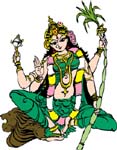
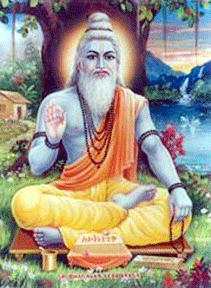
It is popularly known as Vyas Purnima after Sage Vyasa. Sage Vyasa is the son of Parashara muni and Satyavathi (daughter of a fisherman). He was born in on an island in the river Yamuna on the purnima in the month of Ashada. Sage Vyasa is the greatest editor and compiler of holy texts in Hinduism. Sage Vyasa is considered the Adi Guru or the first Guru in Hinduism. Sage Vyasa is called Veda Vyasa - or the Compiler of the Vedas, he compiled the Vedas into four parts - the Rig, Yajur, Sama and Atharva Veda. He authored epic Mahabharatam and Srimad Bhagavtham. He wrote the Puranas so that the common people could also benefit from the knowledge of the Vedas - he conveyed the same spiritual principles through the medium of stories and parables. He is also the author of the Brahma Sutras - the quintessence of Vedanta.
Vyasa Poornima is popularly known as Guru Poornima. The day is dedicated to Guru and he/she is honored and given due respect. Gurus are often equated with God and always regarded as a link between the individual and the Immortal. Just as the moon shines by reflecting the light of the sun, and glorifies it, all disciples can dazzle like the moon by gaining from their Gurus.
July 17-Dakshinayanam
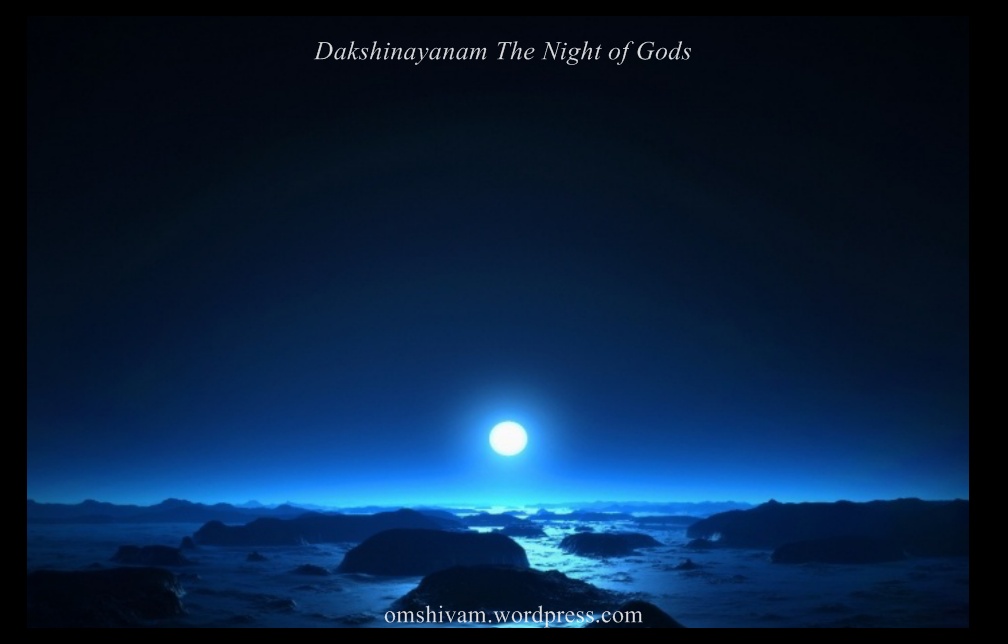
Six months constitute an ayana and two ayanas a year. The names of the two ayanas are Uttarayana (winter solstice) and Dakshinayana (summer solstice).  In simple terms, Dakshinayana Punyakalam or Karka Sankraman or Karkataka Sankranti marks the southern transit of the Sun. The Uttarayana period began on January 14 or 15 ends with Dakshinayana Punyakalam. The Dakshinayanam period will end on Makar Sankranti or Uttarayana day. As per Hinduism, one year for humans is equivalent to a time span of one day and one night for the gods.  Humans pass through uttarayanam, the gods pass through only one day. Similarly, when humans pass through dakshinayanam, the gods pass through merely one night. When the Lord is in yoga-nidra it is befitting to set aside mundane activities and participate in special religious pursuits. Major Hindu festivals occur during Dakshinayanam.
Traditionally, Upanayanam or thread ceremony is not performed during Dakshinayanam but performed only in the Uttarayana period. Transit of Sun is not considered as auspicious as there will be certain disturbances in the organization of solar forces and generally such times are not recommended for any good work. This day is chosen by many Hindus to perform rituals for forefathers.

Tuesday, June 21, 2011

Summer solstice-Dakshinayana

The ‘summer solstice’ occurs exactly when the earth’s axial tilt is most inclined towards the sun. The term solstice is derived from Latin words ‘sol’ (sun) and ‘sistere’ (to stand still). During ‘summer solstice’, June 21, the northern hemisphere witnesses its longest of the year while the southern hemisphere sees its shortest day. It is this day when the sun is at its most northerly point and this is why it is ‘the longest day’, means we receive the most hours of daylight. The sun is closer to North Pole as it reaches its northern most latitude and therefore appears at its highest in the sky at noon and also the warmest day of the year.
 The solstices have been celebrated by many traditions over the ages. No matter where you live, or what you call it, you can connect to a culture that honored a sun deity around this time of year.
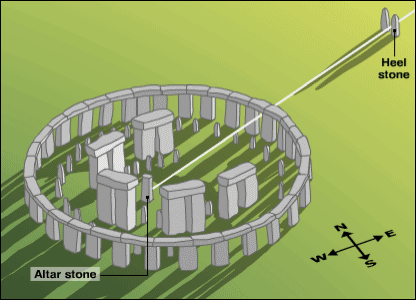
At Britain’s ancient monument Stonehenge, biggest stone circles, the main axis is aligned to the solstice sunrise.  A lot of stones are ten or twelve meters high. The earliest part of Stonehenge is nearly 5,000 years old. Every June 21st hundreds of people go to Stonehenge to watch the sun rise. The sun shines on one famous stone-the Heel stone. The Druids were the priests in Britain 2,000 years ago. They used the sun and the stones at Stonehenge to know the start of the months and seasons.
Karka sankranti (‘san’ means to come together and ‘kranthi’ means radical change) is the summer solstice of Sun, which means sun enters cancer or karkataka rashi (zodiac sign) and it marks the beginning of the dakshinayana period in traditional Hindu Solar calendars. Dakshinayana starts on June 21 for calendars followed in north India, for calendars followed in south India dakshinayana begins on July 16, 2011. The term dakshinayana literally means southern journey. It seems to accentuate the idea that we are entering the darker part of the year – less sun, more rain, longer nights. On this day, performing rituals to pay our respect to pithru devathas (departed ancestors) is considered as highly meritorious deed. 
Enjoy your summer!

“Then followed that beautiful season... Summer....
Filled was the air with a dreamy and magical light; and the landscape
Lay as if new created in all the freshness of childhood.”
-Henry Wadsworth Longfellow

Sunday, June 19, 2011

Happy Father's Day!

“Pithrudevo Bhava” – Father is an essential and the most influential person in our lives. He provides us with care and protection, guidance and support. We rarely thank him for all the love he shows in shaping us as an individual in the society. We are the one who carry the legacy of the family name. Whether we can recognize or not we not only carry the legacy we imbibe his personality, qualities and his lifestyle. We hardly realize that his influence impacts us and unknowingly we pass it on to our future generations. Any individual is lucky to have a father to protect him/her while growing up, most of them may be close to their mother but a dad’s role is unique in a person’s life. He holds you when you cry to show he is there for you, scolds when you break rules to discipline you and is the happiest person on the earth when you succeed.
I have read that, Mother’s Day tradition inspired Sonora Dodd in the establishment of Father’s Day. In 1910 she dedicated her father’s birthday in the month of June as Father’s day, her father a civil war veteran raised 6 children after her mother passed away. Unlike Mother’s Day, it gained gradual momentum and finally President Richard Nixon established the third Sunday of June, as a permanent national observance day of Father's Day in 1972. From USA it has spread to other countries, but Father’s Day is celebrated in various countries in various dates for various reasons.
It is universal fact that the first word we utter is ‘mother’; dads are often the unsung heroes in our lives. He is the person who brings smiles by teaching you first bike, first car, or even being there for you when you are in trouble. Sometimes he may be harsh in words but they are to keep you on right track and make you a good person, which you realize later in your life especially when you become father. As mentioned in my previous posts, I am thankful to my dad who guided me in my studies, in getting me a job and finding me a wonderful husband. I still remember the days he used to take me on his bicycle be it to school, shopping or for his banking transactions. I remember the way he taught me easier way of computing mathematics and required life skills. There are so many things he taught me and guided me so far and still continuing. I know, now it is my responsibility to reciprocate the love, care and guidance my father has bestowed upon me all his life.
As per Hindu epic, Ramayana, a person has five father-like persons in one’s life, his own father, father of the spouse, one’s own guru (teacher), the king (ruler) and elder brother. Father's Day is the day to honor your own father, and all the other men who have played the father figure in your life who are really special. It is the time to let them know how much you love them and care for them. Bring joy to them with a box of happiness. 
Happy Father's Day!

 "A Man's children and his garden both reflect the amount of weeding done during the growing season."
– Anonymous

Thursday, June 2, 2011

Jyestha- the third month of Hindu calendar (June 2- July 1)

The month names in Hindu calendar are given with the nakashatram which falls on the full moon day in that particular month. As the Jyeshta nakshatram (star) falls during Pournami or Full Moon day in this month, hence known as Jyeshta maasam. Some of the festivals performed in this month.
Bhagirathi Jayanthi – June 11, 2011
Bhagirathi Jayanthi is believed to be the day when River Bhagirathi appeared on earth. The word ‘Bhagirathi’ in Sanskrit literally means caused by Bhagiratha.  It is observed on the 10th day during the waxing phase of moon in Jyeshta month. It is believed that King Bhagiratha succeeded in bringing Ganga down to earth on this day after a long penance. Bhagirathi, the source stream of Holy River Ganga, was brought down on to the Earth to find salvation for his 60,000 ancestors, who were cursed by Saint Kapila. Therefore, Ganges descended to the Earth through the lock of hair of Lord Shiva to make whole earth pious, fertile and wash out the sins of humans. For Hindus in India, the Ganges is not just a river but a mother, a goddess, a tradition, a culture and much more. Bhagirathi Jayanthi is observed on the Ganga Dashara day and both celebrates the origin of Ganga River on earth. 
Nirjala Ekadashi (11thday of waxing moon) – June 12, 2011
Nirjala means ‘without water.’ Ekadashi is the eleventh day of waxing or waning moon. Vishnu devotees fast every Ekadashi of a fortnight. There is a story that Bhima, the second of Pandava brothers, wanted to observe Ekadasi fasting but still eat food. He never used to fast as he could not control his hunger. He always had a guilt feeling of not observing fast every Ekadashi as his mother and brothers used to fast. Then his grandfather, Sage Veda Vyasa advised him to fast on Nirjala Ekadashi day in Jyeshta maasam as it has the benefits of observing all the 24 Ekadashis. Thus Bhima was able to get the benefits of all Ekadasis by observing Nirjala Ekadashi. Observing it is also equal to going on pilgrimage.
Lunar Eclipse-June 15 
The Chandra Grahan is a lunar eclipse. According to NASA website it is visible in India along with most middle-eastern countries, Singapore, Malaysia and western parts of Australia. The Chandra grahan will be taking place in India between 11:53 PM on June 15 to 03:32 AM early morning on June 16, 2011.  We all are well aware of how eclipses are formed in our science class; I guess I don’t have to go over here again. Right?
Hindu holy scriptures mention about the Surya Grahan (solar eclipse) and Chandra Grahan (lunar eclipse) in the Samudra Manthan (churning of the ocean) episode in the puranas. Vishnu in the form of Mohini(female form) was distributing the amrutham (holy nectar) after the Samudra Manthan to the Devas (Gods) and Asuras (demons). Both were sitting on each side and Rahu the planet played mischief by sitting in the Devas line, Sun and Moon god’s recognized Rahu so Vishnu severed the head of Rahu. Since then Rahu in the form of snake takes revenge on Sun and Moon by gobbling them partially and periodically. Sun and Moon fight back to free themselves.
Usually fasting is observed few hours before the start of the eclipse until it is cleared. Special bath is taken and mantras are chanted dedicating to Lord Vishnu and Shiva. Pregnant women are taken utmost care and advised to be indoors so the bad rays during the eclipse are not fallen on the baby in the womb.
Vat Savithri Vratha
Vat Savithri Vratha is an auspicious day observed during the full moon day or new moon day, in some regions, by married women for the welfare of the husband and children. Vat Vraksha or Banyan tree symbolically represents the Trimurtis – Brahma, Vishnu and Shiva. The root is Brahma, the stem is Vishnu and the upper portion is Shiva. The whole tree is also symbolically taken as Savithri. The incident is mentioned in the Mahabharata.
It is described that Princess Savithri, the daughter of King Ashwapati of Bhadra Kingdom, fell in love with Satyavan, a woodcutter. But Satyavan was destined to die within a year and Savithri was made aware of this fact by Rishi Narada. But Savithri decided to get married to Satyavan and live with him in the forest. As predicted, Satyavan fell from a tree and died within a year. Yamraj, the god of death, arrived to carry him away. Savithri made it clear to Yamraj that she will follow Yamraj along with her husband. Yamraj tried several ways to deter Savithri from following him but all his efforts were in vain and Savitri remained adamant. Finally, Yamraj was moved by Savithri’s devotion and he brought back Satyavan to life. It is believed that Satyavan spend his last moments under a Vat or Banyan tree on the full moon day in month of Jyeshtha. And Yamraj appeared right near the banyan tree and Savithri pleaded with Yamraj under the Banyan tree. In memory of this event, women go round the Banyan tree for 108 times tying threads and fast for the health and longevity of their husbands.
      It is the beginning of peak summer season indicated by 'greeshma ritu' that will continue for two months starting Jyestha maasam.

Monday, May 23, 2011

Happy Graduation!

Graduation or commencement marks the completion of one level and moving on to the next level. It is a ceremony of conferring degrees or diplomas in schools or colleges. Usually, there is graduation from kindergarten to elementary, from elementary to middle school, from middle to high school and from high school to college. Then there are specialized graduations from medical school, engineering and other professional schools. Graduation process starts almost the beginning of the semester, by auditing their classes and gets approved to graduate. Ready-to-graduate students start ordering their school-approved, color-identified gowns and caps with tassel. Parents, grandparents, family and friends are invited to be part of the celebration. Colleges conduct a series of activities during the commencement week. On the day of the graduation, valedictorian addresses the fellow graduates reminding the day they entered the institution and running down the memory lane of college life. The essential part of the ceremony is to invite a celebrity to deliver a commencement speech, based on what the graduates will be up to face the “real world”, at the same time encouraging them on their endeavors. The important activity of the commencement exercises is recognizing their accomplishments and hard work of the graduates by presenting a degree and a token of memorabilia. Once the degrees are presented the tassel is moved from right part of the hat to the left side of the hat. I am not aware why it is moved to left side after the graduation; my guess is that it could be because the higher education is basically designed for left-brain processing. The graduation ceremony concludes with tossing off their hats up in the air. As you can expect close friends take pictures together with families, friends and professors. Once they are disbursed from the assembly, all the graduates say goodbye to their friends with a heavy heart and move on to their next journey.
I am proud to be in the midst of the celebration of my son’s graduation from a prestigious institution. It was difficult to leave behind all his friends who have chosen their path of journey; he came home with all the memories of the past four years. Graduation in not the end of the journey, in a way, it is a beginning to move on to another phase of life. For some it could be higher education, professional studies and for some it could be a job in the real world earning money. Whatever they choose, graduates gather with friends and family to celebrate the graduation which is a big milestone in their life. Hats off to all the 2011 graduates! 
“A milestone passed, new things begun, dreams as shining as the sun, a goal achieved, a victory won! That's Graduation!”
-Unknown

Sunday, May 8, 2011

Happy Mother's Day!

“Mathrudevo Bhava”- The universe starts with the mother. Each of us exists on the earth because of one’s own mother. Before we step on to this earth, she does not know who we are while in her womb. Yet, she shows all her love and takes care of us. To her child is the highest priority. All her love is only out of the feeling that the child is only hers. The first word we all utter is mother, whatever language we speak (amma, mom, maa, mayee, mutter, maman, mati, madre). See, every language has “M” phoneme in the word mother in their language.
For a child each day is mother’s day. She is the first blood relative. We learn relationships to others with reference to mother. She acts like a baby, friend, philosopher and guide to us from our childhood to adulthood.  In our teen years we may not realize the importance or the value of the mother. Truly, pretty soon you would realize the importance of her in your life. She is the great source of inspiration throughout our lives. There are many in the world with whom we can share our joy, but mother is the only place where we put our hurts, express deep feelings and share worries.   
Historically Mother’s day is not related to the human mother but related to spiritual mother Goddess, since ancient times. Slowly by the advent of 19th century the celebrations started personalizing with human touch. In USA, the second Sunday of May is celebrated as Mother’s day for more than a century. Off late, Mother’s day celebrations are exported to other countries from America, though not celebrated on same day. Today we wish moms by sending greeting cards, presenting her with box of chocolates, giving fancy gifts, gadgets or some mom-sake special items. It is a nice way to honor one’s mother. But what mom really wants is something different.  A few nice words would be a valuable gift for her if you speak heart to heart. Funny though, she would give the box of chocolates back to you. She knows that you like them and you end up eating them.  Helping in her daily chores, being on the bedside with her when sick and showing affection in your conversations, are a few things that you can do.  What else a mother can expect from her own child! The child may be rich or poor, famous or infamous, good or bad, high or low in social status; you are the same child to her. Mother and child relationship is a unique sublime bond that every one of us enjoys. Isn’t it?
 My childhood is unique in its own way with my childishness and prolonged illness. Each time I see my face in the mirror I remember my mom for her sacrifice and the care she took. My face would have easily disfigured without her special care. Thank you, Mom. I feel guilty if I stop here with mere thanks. Words would not be sufficient to express my deep feelings about all the good things that she did to me.
We should be grateful to God on this day, the Mother's Day, for sending an angel in the form of Mother to our life. I wish all mothers, A Happy Mother’s Day!
  
"Mothers hold their children's hands for a short while, but their hearts forever." 
-Author Unknown

Wednesday, May 4, 2011

Vaishakha-The second month of Hindu Lunar Calendar (May 4- June1)

Hindu months, as per lunar calendar starts from the day after the new moon day (amavasya) to the new moon day. The star Visakha, one of the 27 stars, falls on the full moon day and so this month is called Vaisakha maasam (month).
Some of the important festivals of the month are:
Day 6- Akhshya Thrutiya
The word Akshaya means ‘that which never diminishes’ and the day is ideal for beginning new ventures as it is believed that all investments on this day appreciates. Thrutiya is the third day after new moon day.
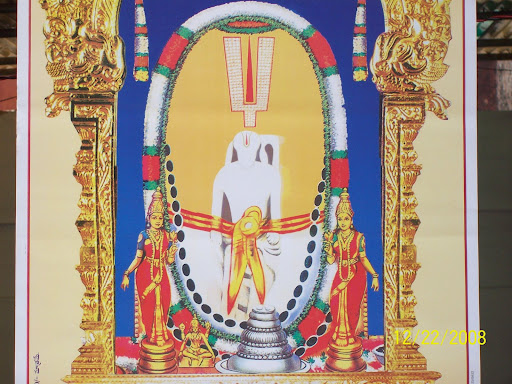
According to the Puranas, the day also marks the beginning to Threta Yuga. On this day, Veda Vyasa began the composition of the Mahabharata. In Andhra Pradesh, Simhachalam temple near Visakhapatnam celebrates Akhshaya Thrutiya as grand festival. That is the only day Sri Varaha Narasimha Swamy Nijarupa (original deity form) darshanam is available to devotees.

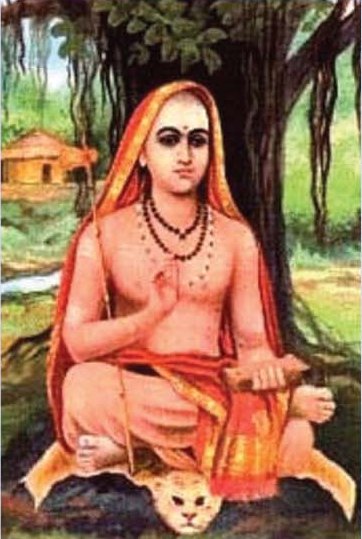
May 8- Sri Sankara Jayanthi
Sri AdiSankaraCharya was born on the fifth day after new moon day of this month. Adi Shankaracharya, is considered as an incarnation of Lord Shiva by many people. It was Shankaracharya who had revived the teachings of Upanishads.One of India’s greatest philosopher and saint, Shankaracharya consolidated the doctrine of Advaita Vedanta. His teachings are based on the unity of the Atman and Brahman—non-dualism.


May 16-Sri Narasimha Jayanthi-fourth dasaavatara of Lord Vishnu
Narasimha, or Nrsimha Jayanthi is observed on the 14th day after the new moon day. The fourth incarnation of Lord Vishnu is popularly known as ‘man-lion’ or ‘half man – half lion’. It is believed that Lord Vishnu appeared in the form of Narasimha on the day to destroy demon Hiranyakashipu to safeguard an ardent devotee, Prahalad who is the son of Hiranyakashipu and to restore the path of Dharma.


May 27-Hanuman Jayanthi
Lord Hanuman is also known as Bajrang Bali, Anjaneya and is one of the most popular Gods in Hinduism. Lord Hanuman symbolizes strength and unparalleled devotion and selfless service. He is the greatest devotee of Lord Ram and he is a Brahmachari (celibate) and humility is his hallmark. He is a Chiranjeevi – one blessed with immortality. In Andhra Pradesh, Hanumant Jayanti is observed on 10th day after full moon of the month.